Arcade Management System: Features, Benefits & How to Choose the Right Software
Running an arcade involves much more than managing game machines. Operators need to monitor equipment, process payments, manage player accounts, track revenue, and keep daily operations running smoothly. When these activities rely on disconnected systems or manual processes, it becomes difficult to maintain control and understand overall business performance.
An arcade management system brings these essential functions together through connected hardware and software. From cashless payments and game card management to machine monitoring and sales reporting, it helps operators manage their venues through a more centralized approach.
Whether you operate a small arcade, a family entertainment center (FEC), or multiple entertainment venues, choosing the right management solution can make a significant difference to operational efficiency and long-term growth.
What Is an Arcade Management System?
An arcade management system is an integrated hardware and software solution designed to manage the daily operations of an arcade or entertainment venue.
It connects game machines, card readers, payment devices, point-of-sale terminals, self-service kiosks, and management software into a coordinated operating environment.
Depending on the solution, key functions may include:
- Game machine and equipment management
- Cashless payment and game card management
- POS and transaction processing
- Membership and customer management
- Self-service card recharge
- Revenue tracking and sales reporting
- Employee permissions and operational controls
- Multi-location management
Unlike a standalone payment terminal or POS system, a complete arcade management solution aims to connect customer transactions with machine activity and venue operations.
For operators, this means having a clearer view of how the business is performing without managing every function through a separate platform.
How Does Arcade Management Software Work?
An arcade management system typically works through three connected layers: equipment on the game floor, transaction channels, and centralized management software.
1. Connect Game Machines and Readers
Compatible arcade machines can be connected to card readers or other supported control devices.
When a player taps an RFID game card or supported wristband, the reader identifies the account and processes the relevant gameplay transaction according to the system configuration.
This allows operators to manage supported game access, credit usage, and machine-related transaction records through the connected platform.
2. Manage Customer Transactions
Customers may purchase game cards, recharge credits, or make other purchases through a staffed POS terminal or self-service kiosk.
The transaction channel communicates with the relevant account and payment services so that the system can process purchases and update the corresponding records.
3. Centralize Data and Operations
The management platform collects information from connected devices and transaction channels.
Depending on the system's capabilities, managers can review sales, monitor machine performance, manage card accounts, adjust selected settings, and generate operational reports.
Instead of treating payments, machines, and customer information as separate activities, operators can manage them through a more connected workflow.
Key Features of an Arcade Management System
The right combination of features depends on the venue's size, attraction mix, business model, and operating requirements.
1. Game Machine Management
Game machines are the core revenue-generating assets of an arcade. Operators need to understand how each machine performs and whether it is contributing to the venue's business goals.
A management platform may support:
- Machine registration and configuration
- Game credit and pricing settings
- Machine-level transaction records
- Revenue tracking by machine
- Performance comparisons
- Device status monitoring, where supported
These capabilities help managers identify high-performing machines, review underperforming equipment, and make more informed decisions about machine placement and pricing.
For larger venues, machine-level visibility can be especially useful when managing different game categories, zones, and equipment suppliers.
2. Cashless Payment and Card Management
Cashless payment is an important part of many modern arcade operations.
Instead of relying entirely on coins or tokens, customers can use rechargeable RFID cards or supported wristbands to access compatible games.
An integrated card management solution can support:
- New game card issuing
- Card activation and account management
- Credit top-ups
- Balance inquiries
- Game transaction records
- Card blocking and account controls
- Promotional credits and bonus packages, where supported
For operators, connecting card transactions with the central platform helps create a more consistent way to manage player accounts and gameplay activity.
3. POS and Payment Management
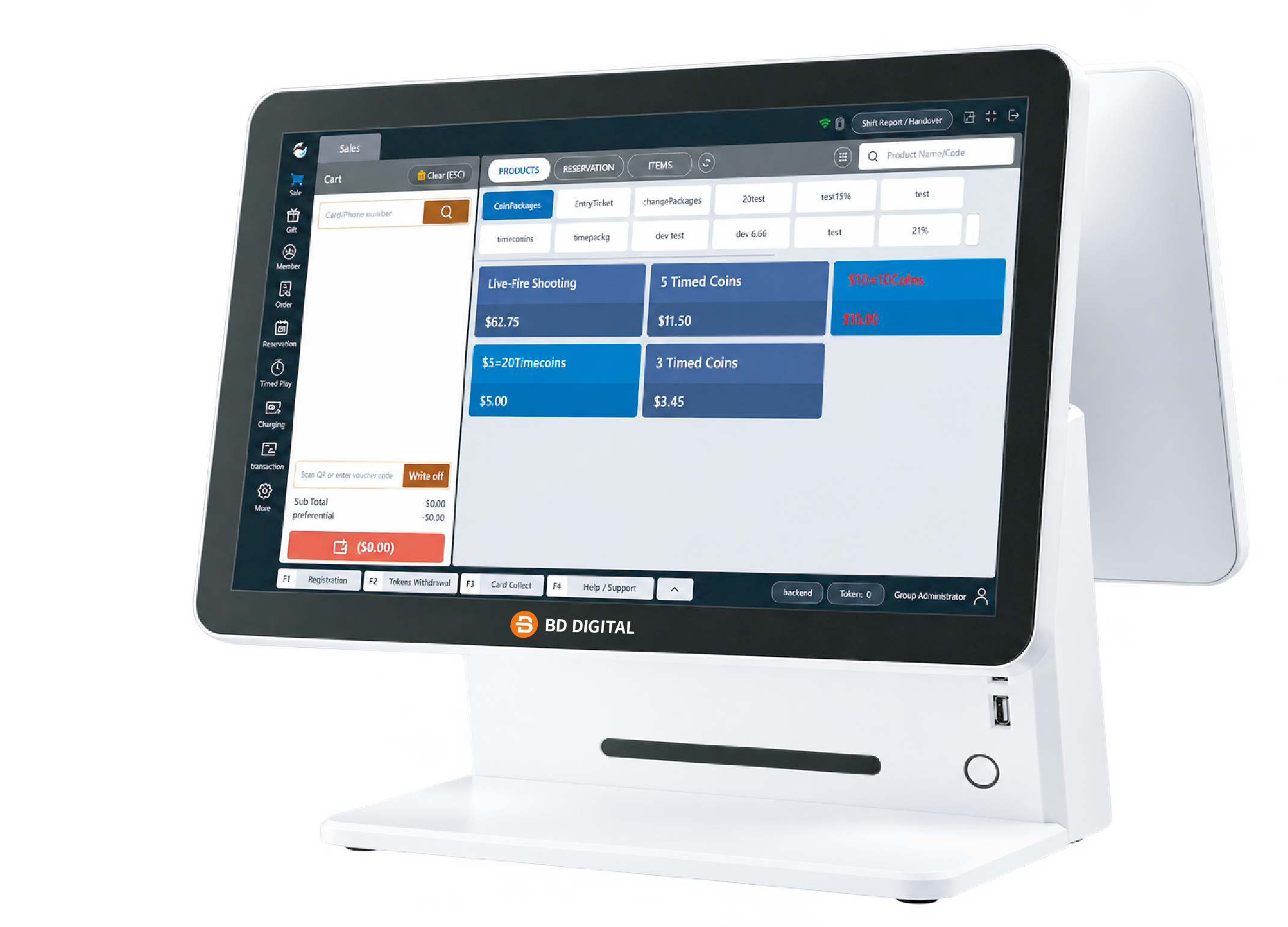
A point-of-sale system manages transactions at the front desk and other sales locations.
For an arcade or FEC, these transactions may include game card sales, credit packages, memberships, admission tickets, food and beverages, or merchandise.
A connected POS solution can help operators manage product pricing, payment processing, cashier activity, transaction history, and sales reports.
Payment integration is also important. Depending on the hardware, provider, and market, a venue may support cash, bank cards, contactless payments, or local digital payment methods.
Operators should verify the supported payment providers and local integration requirements before implementation.
4. Self-Service Kiosk Management
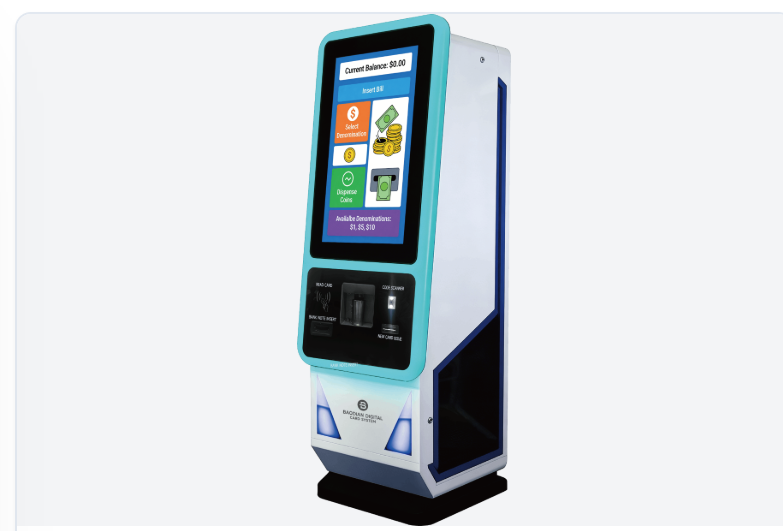
Self-service kiosks provide another way for customers to complete routine transactions.
Depending on the device configuration, customers may be able to purchase new game cards, recharge existing balances, select credit packages, or make payments without waiting at the cashier.
When connected to the card system and management software, kiosk transactions can be recorded alongside front-desk sales.
This helps distribute customer traffic and gives staff more time to focus on assistance and venue operations.
5. Membership and Customer Management
Customer relationships are important for entertainment venues that depend on repeat visits.
Membership management features can help operators maintain customer profiles, manage membership levels, track eligible benefits, and support loyalty programs.
When customer accounts are connected to payment and gameplay records, operators may gain a better understanding of purchasing behavior and visit patterns.
This information can support customer retention activities, targeted promotions, and membership strategies.
The exact customer data and marketing functions available depend on the platform and its privacy and consent settings.
6. Revenue Reporting and Business Analytics
A centralized reporting system helps operators understand how their venue performs.
Depending on the available modules, reports may include:
- Total sales and revenue trends
- Revenue by individual game machine
- Game card sales and recharge records
- Payment method breakdowns
- Product and package performance
- Customer and membership activity
- Performance by venue or location
These insights help management evaluate business performance, identify operational issues, and make decisions based on transaction data rather than assumptions.
For multi-location businesses, consolidated reporting can also make it easier to compare different branches.
7. Multi-Location Management
As an arcade business expands, managing different venues through separate systems can create additional work.
A platform with multi-location capabilities may allow owners to access information across branches, manage selected settings centrally, and compare performance between locations.
This is particularly useful for operators running multiple arcades or entertainment centers with different machine combinations and customer profiles.
Before selecting a solution, confirm whether it supports centralized reporting, shared customer accounts, cross-location card usage, and the specific permissions your organization needs.
Benefits of Using an Arcade Management System
1. More Efficient Daily Operations
Connecting machines, payments, and customer transactions reduces the need to manage every activity independently.
Staff can handle routine transactions through connected tools, while managers can access relevant operational information through a central platform.
2. Better Revenue Visibility
Machine-level and transaction-level records help operators understand where revenue comes from.
Managers can compare game performance, review sales trends, and identify areas that may need adjustments.
3. Improved Customer Experience
Cashless payments, self-service options, and connected customer accounts can make it easier for visitors to purchase credits and enjoy games.
A smoother process can reduce unnecessary waiting and interruptions during a visit.
4. More Effective Customer Retention
Membership programs, loyalty benefits, and customer account information can help venues build stronger relationships with repeat visitors.
Operators can use relevant purchasing and membership insights to design more suitable promotions.
5. Easier Business Expansion
A connected operating platform can provide a consistent management structure as a venue adds more machines, attractions, or locations.
The ability to expand should still be verified against the system's supported hardware, integrations, and licensing model.
Arcade Management System vs. Arcade POS System
These two terms are related, but they do not describe exactly the same thing.
An arcade POS system primarily focuses on sales and payment transactions. It helps staff process purchases, recharge game cards, manage products, and record payments.
An arcade management system has a broader scope. It may include POS functions while also connecting machine management, card readers, kiosks, customer accounts, reporting, and other venue operations.
FunctionArcade POS SystemArcade Management SystemSales and paymentsCore functionOften includedGame card rechargeSupported when integratedCan be part of the wider platformGame machine managementUsually limitedMay be includedCustomer and membership managementDepends on softwareMay be includedSelf-service kiosk integrationDepends on integrationMay be includedMachine-level reportingUsually limitedMay be supportedMulti-location visibilityDepends on platformMay be supported
A POS system can be sufficient for venues with simple sales requirements. Operators managing cashless gameplay, multiple machines, customer accounts, and several transaction channels may benefit from a more comprehensive platform.
How to Choose the Right Arcade Management Software
Choosing a solution should start with the way your venue operates, not simply the number of features listed in a product brochure.
1. Define Your Operational Requirements
Identify the main functions your venue needs.
Consider your machine types, payment methods, card system, membership model, attractions, and reporting requirements.
A small arcade may need machine transactions and card recharge, while a larger FEC may also require ticketing, access control, bookings, and food and beverage management.
2. Check Hardware Compatibility
Confirm whether the system supports your existing arcade machines, readers, payment terminals, and other devices.
If you are upgrading an existing venue, ask whether the supplier can integrate with your current equipment or whether replacement hardware is required.
3. Evaluate Software Integration
Check how the POS, card system, kiosks, and management platform communicate.
Ask which functions are native, which require additional modules, and which depend on third-party integrations.
A clear integration plan can help avoid unexpected costs and implementation problems.
4. Review Reporting and Management Capabilities
Look beyond basic sales totals.
Evaluate whether the platform provides the machine-level, customer-level, and location-level information you need to manage your business.
Also check whether reports can be exported and whether managers can access information remotely, if required.
5. Consider Scalability and Support
Think about future plans, including additional machines, new attractions, payment methods, or locations.
Also review installation, training, software updates, maintenance, technical support, and the supplier's experience with similar venues.
A suitable system should support both your current operating needs and a realistic path for future expansion.
Conclusion
An arcade management system connects the essential parts of an entertainment venue, from game machines and cashless payments to POS transactions, memberships, and business reporting.
For arcade and FEC operators, its value lies in making different operational activities work together rather than managing each function in isolation.
When evaluating a solution, focus on hardware compatibility, system integration, reporting capabilities, customer management, and future scalability.
The right platform can give operators better visibility into venue performance, support a more convenient customer experience, and provide a stronger foundation for managing and growing an entertainment business.
Frequently Asked Questions
What is arcade management software?
Arcade management software is a platform used to manage arcade operations, including game machine transactions, payments, player cards, sales, customer accounts, and reporting. Available functions depend on the provider and system configuration.
What does an arcade management system include?
A comprehensive solution may include machine management, card readers, cashless payment, POS, self-service kiosks, membership management, and reporting tools. Some platforms also support ticketing, access control, bookings, and multi-location operations.
What is the difference between an arcade card system and an arcade management system?
An arcade card system focuses on player cards, stored credits, card readers, and gameplay transactions. An arcade management system has a broader scope and may connect the card system with POS, machine management, memberships, and venue reporting.
Can an arcade management system monitor individual game machines?
Some systems provide machine-level transaction records, revenue reports, and device status monitoring. The exact monitoring capabilities depend on hardware compatibility and the software modules available.
Is arcade management software suitable for FECs?
Yes. FECs often combine arcade games with other attractions and services. A suitable platform can connect supported payment, card, POS, membership, and operational workflows across different areas of the venue.
Can an arcade management system manage multiple locations?
Some platforms support centralized management and consolidated reporting across multiple venues. Operators should confirm whether the system supports their required branch permissions, shared accounts, and reporting structure.
How much does an arcade management system cost?
Pricing varies depending on the number of machines, readers, kiosks, software modules, payment integrations, installation requirements, and support services. Operators should request a quotation based on their venue size and required configuration.