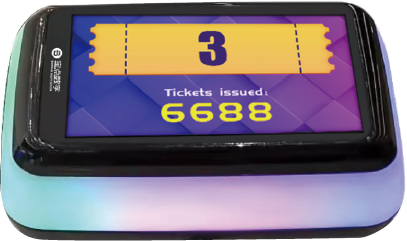
What Is an Arcade Card System?
An arcade card system is a digital game payment and management solution that allows customers to play arcade games using a rechargeable card or wristband instead of coins or tokens.
Customers purchase game credits at a POS terminal, recharge kiosk, or other payment point. The credits are then associated with their arcade card or customer account.
When the customer wants to play, they simply tap or swipe the card on a card reader installed on the arcade machine. The system verifies the available credits and activates the game.
A complete arcade card system may include:
- Arcade cards
- RFID or NFC card readers
- Arcade machine interfaces
- POS terminals
- Recharge kiosks
- Card dispensers
- Membership management
- Customer accounts
- Arcade management software
- Payment integrations
- Business reporting
Instead of treating each arcade machine as an independent payment point, the system connects the machines to a centralized platform.
How Does an Arcade Card System Work?
The basic process is straightforward.
1. Customer Purchases Credits
Customers purchase game credits through a POS terminal, self-service kiosk, or other supported payment channel.
For example, a customer may purchase a package containing a certain number of game credits.
2. Credits Are Added to the Card
The purchased credits are associated with the customer's arcade card or account.
Depending on the system architecture, the card may contain identification information while the actual credit balance is managed by the central software.
3. Customer Taps the Card
The customer presents the card to the arcade card reader installed on the game machine.
The reader identifies the customer account and checks the available credits.
4. The Game Starts
If sufficient credits are available, the system authorizes the play and communicates with the arcade machine.
The required number of credits is deducted automatically.
5. The Transaction Is Recorded
The system records the transaction and makes the information available to the operator.
Operators can then analyze information such as:
- Machine revenue
- Game activity
- Credit usage
- Customer spending
- Membership activity
- Recharge transactions
The complete process can be summarized as:
Purchase → Recharge → Tap → Play → Deduct Credits → Record Data
This creates a connected payment and management environment for the arcade.
Key Components of an Arcade Card System
A card system is not just a plastic card.
Several hardware and software components work together to create the complete solution.
Arcade Cards
The card is the customer's access and payment medium.
Depending on the system, arcade cards may use RFID, NFC, magnetic stripe, or other technologies.
A venue can also use branded cards as part of its customer experience and membership program.
Arcade Card Readers
The card reader is installed on the arcade machine and allows customers to access their game credits.
A good reader should provide:
- Fast card recognition
- Reliable communication
- Durable hardware
- Easy installation
- Compatibility with arcade machines
Because customers interact with the reader every time they play, reliability is an important part of the overall experience.
POS Terminal
The POS system allows staff to sell:
- Game credits
- Packages
- Memberships
- Merchandise
- Food and beverages
- Promotional products
When integrated with the arcade card system, the POS can connect purchases directly with the customer's account.
Recharge Kiosk
Self-service kiosks allow customers to purchase or reload credits without waiting at the counter.
This can be especially useful during busy periods.
A kiosk can potentially support:
Select Package → Make Payment → Recharge Card → Start Playing
This reduces friction between entering the venue and starting the first game.
Card Dispenser
For venues that issue new cards to customers, a card dispenser can automate the card distribution process.
This is useful for high-volume entertainment venues where staff need to process many customers quickly.
Management Software
The management platform connects all the components together.
It can provide tools for:
- Machine management
- Payment management
- Customer management
- Memberships
- Promotions
- Reporting
- Employee management
- Venue operations
This software layer is what turns individual card readers into an integrated arcade card system.
Benefits of an Arcade Card System
1. Make Arcade Payments Faster
One of the biggest advantages of a card-based system is convenience.
Customers no longer need to carry coins or purchase tokens for individual games.
Instead, they can load credits once and use the same card across the venue.
This creates a simpler customer journey:
Buy → Tap → Play
For busy arcades and FECs, reducing payment friction can also help reduce queues around the front desk.
2. Reduce Coin and Token Management
Traditional arcades need to collect, count, store, and maintain physical coins or tokens.
This can create additional operational work.
A card-based system replaces much of this manual process with digital credit management.
Operators can reduce the need for:
- Coin collection
- Token inventory
- Manual counting
- Coin mechanism maintenance
- Physical cash handling
The result is a more centralized payment process.
3. Improve Customer Spending Opportunities
Digital credits make it easier to create different packages and promotions.
For example, operators can offer:
- Bonus credits
- Recharge packages
- Member discounts
- Promotional credits
- Birthday packages
- Loyalty rewards
Instead of paying separately for every game, customers can purchase a larger credit package and use it throughout the venue.
This gives operators more flexibility in designing their pricing strategy.
4. Connect Payments With Membership
An arcade card can become more than a payment tool.
When connected with customer accounts, the card can also function as a membership identifier.
Operators can manage:
- Member profiles
- Membership levels
- Rewards
- Discounts
- Visit history
- Promotional offers
- Customer activity
This creates an opportunity to turn occasional visitors into repeat customers.
5. Gain Better Business Data
A traditional coin-operated machine can tell an operator how much money was collected.
An integrated card system can provide much more information.
Operators may be able to analyze:
- Which machines generate the most revenue
- Which games receive the most plays
- When customers visit
- How much customers spend
- Which promotions perform well
- How members use the venue
This data can help operators make better decisions about machine placement, pricing, promotions, and equipment investment.
6. Simplify Multi-Machine Management
A venue may have dozens or hundreds of arcade machines.
Managing each machine independently becomes increasingly difficult as the venue grows.
A centralized arcade card system allows operators to manage connected machines from one platform.
Instead of checking every machine individually, operators can access centralized information about transactions and machine activity.
Arcade Card System vs. Traditional Coin System
The transition from coins to cards changes more than the payment method.
FeatureCoin / Token SystemArcade Card SystemGame paymentCoins or tokensDigital creditsPayment processPer machineCentralized rechargeCustomer balanceNot normally trackedDigital balanceMembershipLimitedSupportedPromotionsMore difficultFlexibleCustomer dataLimitedMore detailedRevenue reportingManual/basicCentralizedCash handlingHigherReducedSelf-serviceLimitedSupportedMulti-machine managementSeparateConnected
Traditional coin systems can still be appropriate for certain venues.
However, operators looking to introduce memberships, promotions, customer accounts, self-service recharge, or centralized reporting may need a more connected system.
Arcade Card System vs. Cashless Arcade System
The two terms are closely related but describe slightly different concepts.
An arcade card system focuses specifically on using cards or similar identifiers to access game credits and arcade machines.
A cashless arcade system describes a broader approach to operating an arcade without physical cash, coins, or tokens.
A cashless system may use:
- RFID cards
- NFC cards
- Wristbands
- QR codes
- Mobile applications
- Digital wallets
Therefore, an arcade card system can be part of a larger cashless arcade ecosystem.
For operators, the important question is not simply:
“Does the system support cards?”
It is:
“Can the system connect payments, game access, customer accounts, memberships, and venue operations?”
That distinction becomes increasingly important as the venue grows.
Important Features to Look for in an Arcade Card System
When comparing systems, operators should evaluate the complete platform rather than focusing only on card readers.
Machine Compatibility
The system should support the arcade machines used in your venue.
This is particularly important when a venue uses equipment from different manufacturers.
Before implementation, confirm:
- Machine compatibility
- Communication interfaces
- Reader compatibility
- Installation requirements
- Supported game types
Flexible Payment Options
Customers increasingly expect convenient payment methods.
Depending on the market, a system may need to support:
- Bank cards
- Mobile payments
- Digital wallets
- Online payments
- Cash payments at POS
The card system should connect these payment methods with the customer's game-credit account.
Self-Service Recharge
A recharge kiosk can reduce pressure on the front desk.
Customers can independently:
- Buy credits
- Recharge cards
- Check balances
- Purchase packages
This can be especially valuable during peak periods.
Membership and Loyalty
If your business strategy depends on repeat visits, make sure the system supports customer accounts and membership functionality.
Useful features can include:
- Member profiles
- Loyalty points
- Discounts
- Bonus credits
- Promotional campaigns
- Visit history
This turns the arcade card from a simple payment device into part of a customer relationship system.
Machine Management
The system should provide visibility into machine activity.
Operators may want to monitor:
- Revenue
- Play counts
- Machine status
- Usage
- Performance
- Fault information
The more machines a venue operates, the more valuable centralized management becomes.
Reporting and Analytics
A professional platform should provide useful operational reports.
Examples include:
- Daily revenue
- Machine revenue
- Credit sales
- Membership sales
- Customer activity
- Promotional performance
- Payment reports
The objective is not simply to collect data.
It is to turn data into information that operators can use to improve the venue.
How to Choose an Arcade Card System
Before purchasing an arcade card system, operators should evaluate the entire operating environment.
Start With Your Machines
List the machines currently in your venue and identify their compatibility requirements.
Define Your Customer Journey
Determine how customers will:
Enter → Purchase → Recharge → Play → Redeem → Return
Define Your Payment Requirements
Consider the payment methods your local customers prefer and how those payments will connect to game credits.
Consider Your Membership Strategy
If you plan to introduce loyalty programs or memberships, make sure the system supports customer accounts.
Plan for Future Expansion
Consider whether you may:
- Add more machines
- Add kiosks
- Introduce memberships
- Add other attractions
- Open additional venues
A system should support the business you are building, not only the venue you operate today.
Arcade Card Systems for FECs and Entertainment Venues
The role of an arcade card system becomes even more important in a modern FEC.
A typical FEC may combine:
- Arcade games
- Redemption games
- VR attractions
- Bowling
- Children's attractions
- Party rooms
- Food and beverages
In this environment, customers may benefit from having one account that can be used across different attractions.
For operators, the system can connect:
Payments + POS + Arcade Machines + Membership + Customer Data + Operations
This creates a more unified venue experience.
For multi-location operators, centralized management can also help standardize operations and provide visibility across different venues.
Common Mistakes When Choosing an Arcade Card System
Choosing the Card Before the System
The card is only one part of the solution.
The software, reader, machine interface, POS, and payment infrastructure all need to work together.
Focusing Only on Hardware Price
A lower initial hardware price does not necessarily mean a lower overall operating cost.
Consider installation, maintenance, software, support, and future expansion.
Ignoring Machine Compatibility
Always confirm compatibility with existing arcade machines before purchasing hardware.
Not Planning for Customer Data
If your long-term strategy includes memberships and loyalty programs, customer accounts should be considered from the beginning.
Building a System That Cannot Scale
A solution suitable for a small arcade may not be appropriate for a large FEC or multi-location operation.
Consider future requirements before implementation.
Arcade Card System Checklist
Before choosing a system, ask:
- Does it work with our arcade machines?
- What card technology does it use?
- Does it support RFID or NFC?
- Can customers recharge cards themselves?
- Does it include a POS system?
- Can it connect to self-service kiosks?
- Does it support memberships?
- Can it manage promotions?
- Can operators monitor machine activity?
- Does it provide revenue reports?
- Can it support multiple venues?
- What payment methods are supported?
- How is the system maintained?
- What technical support is available?
A complete evaluation should consider the entire operating ecosystem, not just the card itself.
Why Arcade Card Systems Are Becoming More Important
Arcade businesses are becoming increasingly digital.
Customers are already familiar with contactless payments, digital wallets, loyalty programs, and self-service technology in many areas of their daily lives.
The same expectations are increasingly relevant to entertainment venues.
An arcade card system allows operators to combine a convenient customer payment experience with centralized venue management.
The card becomes the connection between:
Customer → Payment → Game → Membership → Data
This creates opportunities for operators to improve the customer journey while gaining more information about how their venue operates.
For larger arcades and FECs, the value extends beyond payment. A connected card infrastructure can become part of the foundation for machine management, customer engagement, and multi-venue operations.
Conclusion
An arcade card system provides modern entertainment venues with a way to move beyond traditional coins and tokens while connecting payments, arcade machines, memberships, and customer data.
The system typically combines cards or wristbands, card readers, POS terminals, recharge kiosks, and management software to create a connected arcade environment.
For operators, the key consideration is not simply whether a system can replace coins.
The more important question is whether it can support the entire customer and operational journey—from payment and game access to memberships, machine management, reporting, and future expansion.
Whether you operate a small arcade, a large FEC, or multiple entertainment venues, evaluating the system as a complete platform can help you build a more efficient and scalable arcade operation.